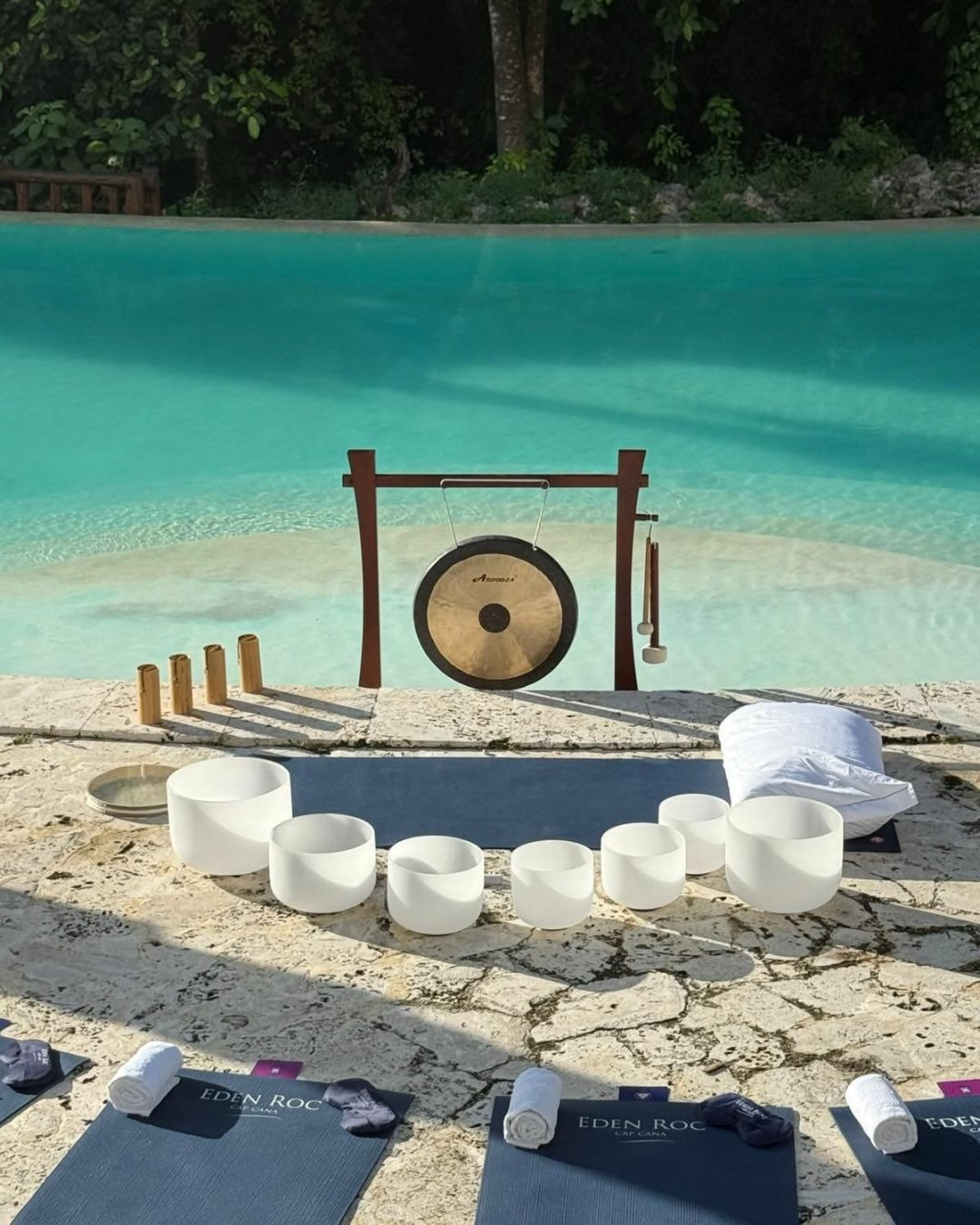
Sound is the wellness world’s newest favorite tool. Sound Healing, Sound Baths, Sound Meditation—however they’re branded, these experiences are currently all the rage at hotels, with more and more introducing them as part of their wellness offerings. And honestly, I’ve never really understood the appeal. Typically, participants lie on the floor, heads on pillows and eyes covered with masks, while the session leader creates sounds by circling a series of different-sized singing bowls with a small baton. The vibrations from these instruments are purported to have relaxing—even healing—qualities, lowering cortisol to trigger the body’s natural restorative processes. Participants report slipping into deep meditative states, bursting into tears midway through, and completing their hour-long journey feeling renewed. But despite partaking in many of these sessions, everywhere from Utah to Ubud, I’ve simply fallen asleep and awakened feeling a little groggy after a short nap each time. I’m always open-minded about experiences, so what was I not getting that others were? Why did it feel like a waste of time? I even politely declined a sound bath at Forestis earlier this year because I didn’t really see the point. That was until this week, when I tried the Sound Healing session at Eden Roc Cap Cana, which completely changed my perspective on the trend. Firstly, the experience was greatly heightened by the spectacular setting. One of the property’s private villas—which guests can also rent—is built over a cenote, a naturally occurring pool within a limestone cave commonly found across the Caribbean and Mexico’s Yucatán Peninsula. The crystal-clear water, tropical foliage draped over craggy rock walls, and sounds of birds gently echoing through the bowl-like cavern felt infinitely more special than a hotel fitness studio. On a wooden deck tucked beneath a limestone outcrop, our mats fanned out toward the water, while the musical equipment was arranged behind us, rather than in front as is usually the case. |
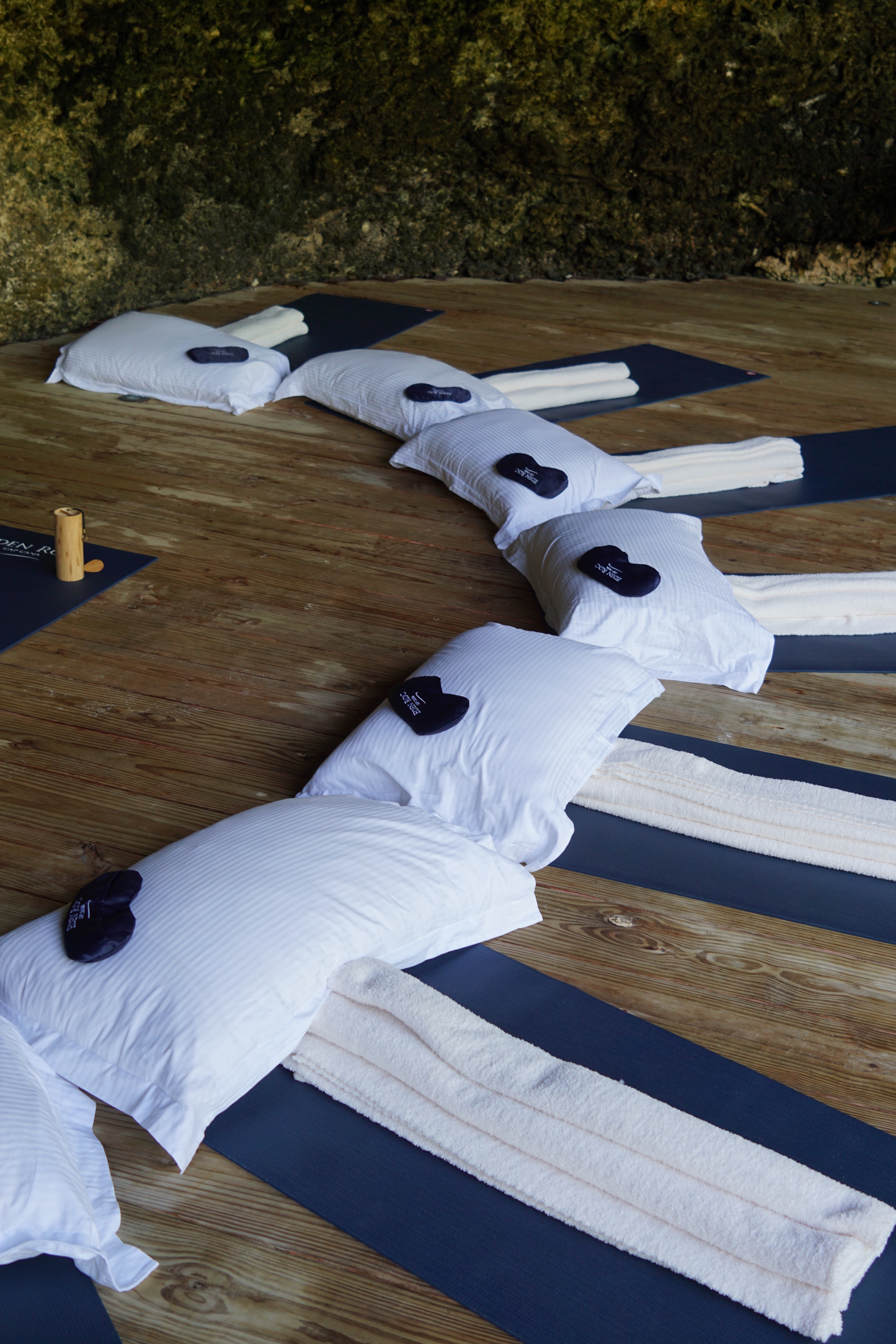
The body positioning was also slightly different. Atop the mats, towels were folded into ridges and laid in a line from the pillow to follow the spine, opening up the chest for better breathing and improved posture. Rather than using only a set of bowls, the leader employed multiple instruments to create a much broader range of sounds, helping to break up the monotony of resonating tones. There were chimes, gongs, and several other percussive elements. My favorite evoked waves crashing on a beach, and as the session leader moved it around my head, the surround-sound quality felt mesmerizing. Overall, the sounds were calming and invigorating in equal measure, and at no point did I feel bored or sleepy. My mind races far too quickly to ever reach a meditative state, so at the very least, this was enjoyable to listen to—and temporarily distracting. When the session leader vocalized his final chants and we finally sat up, the view of the cenote awaited our long-closed eyes, and everyone remained silent for several minutes, soaking in the beauty of the moment. Was I “healed”? Unclear. But for the first time, I felt genuinely relaxed—and even inspired—after one of these sessions. I’ll forever compare future sound-related wellness experiences to this one, and I’m now curious to see which hotels might top it. BY DAN HOWARTH |