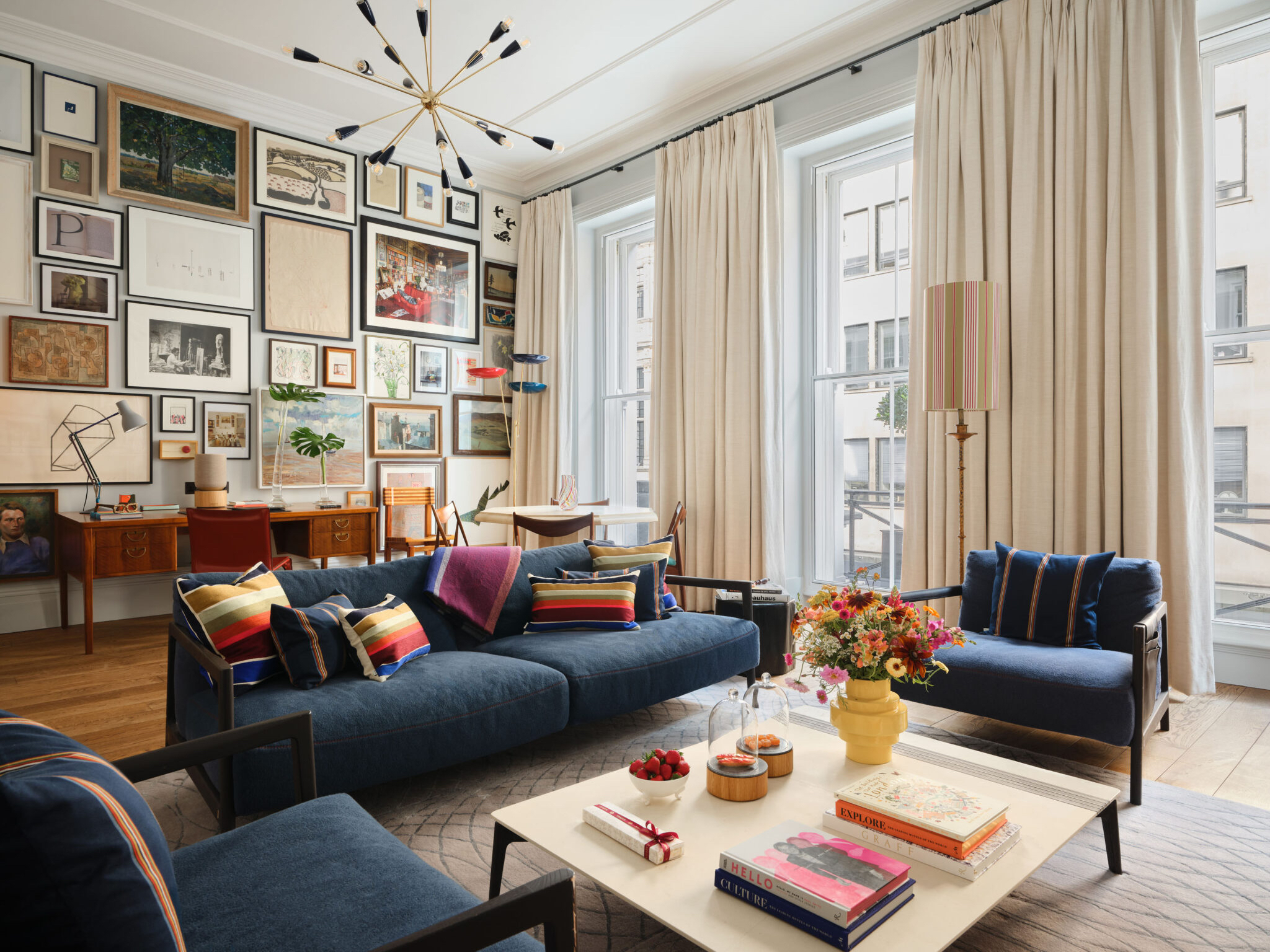
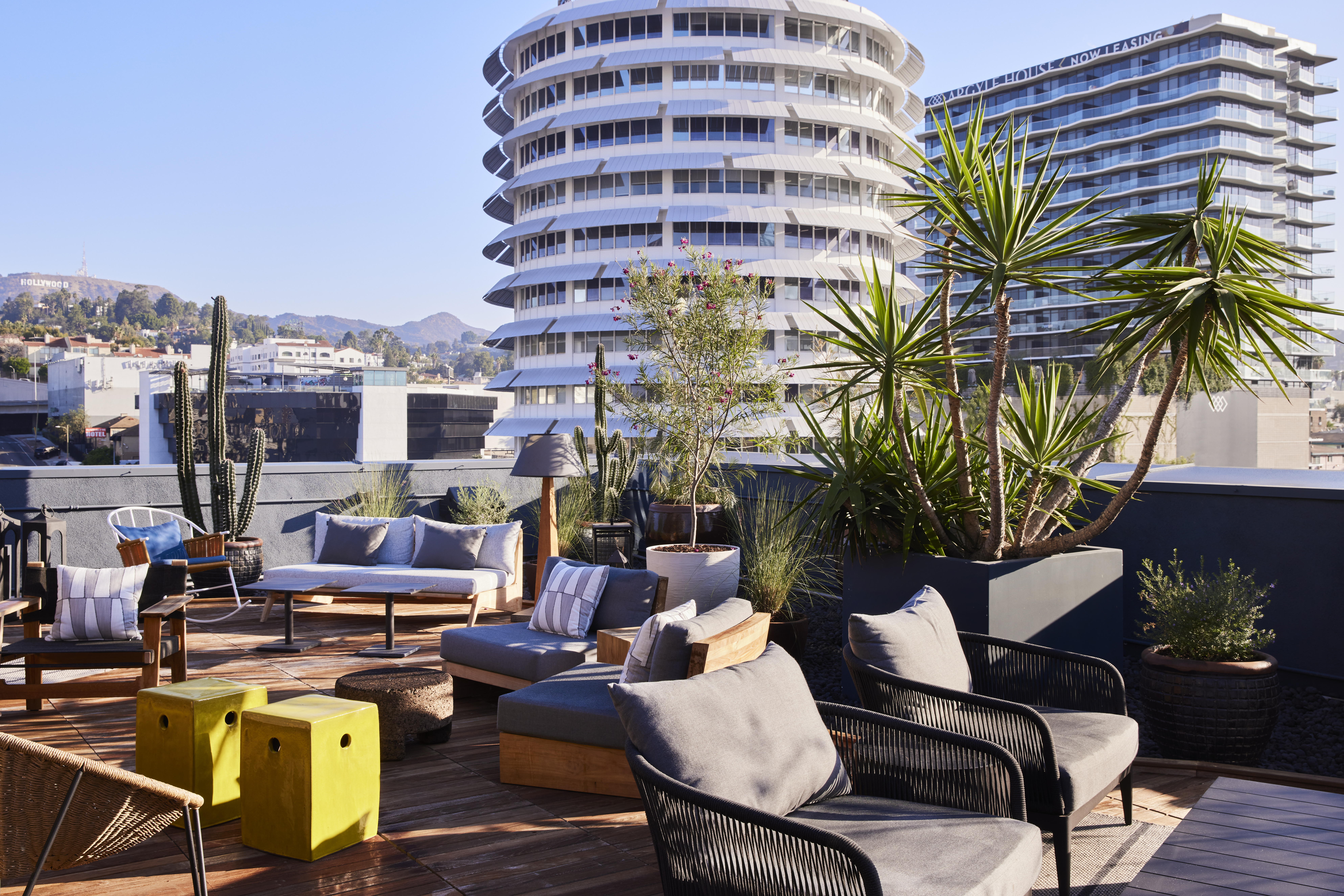
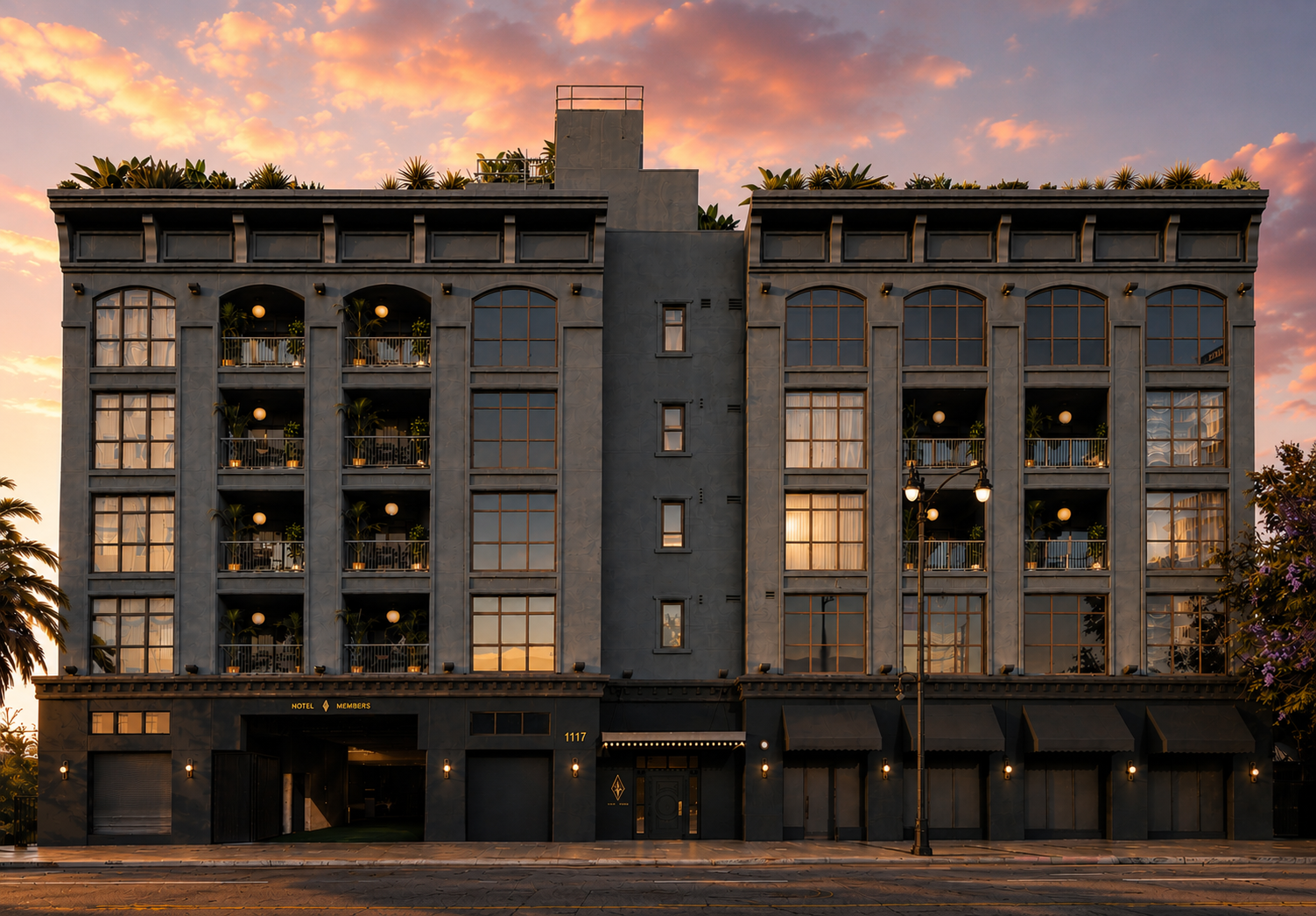
Brandon: For someone who's never walked in—what is The Aster? Bill: "The first impression of The Aster is probably not what someone expects to find in Hollywood. You walk in from the energy of Hollywood and Vine and immediately enter an environment that feels warm, rich, residential, and reminiscent of an intimate luxury hotel or a traditional members' club. That first experience is shaped by the reason for your visit, whether you are checking into the hotel, meeting a member for lunch, attending an event, or arriving as a member yourself. Color, texture, art, comfortable furniture, music, and a genuine sense of hospitality fill the space. Most importantly, the service is genuine. You are greeted, recognized, and made to feel that you have arrived somewhere special without it ever feeling overly formal. The Aster is designed to create an emotional response and is a place where you want to stay rather than simply pass through." Brandon: LA has San Vicente, Soho House, Chateau, Heimat, Crossroads, Bird Streets. What makes the case for the city needing another members' club? What makes The Aster different? Bill: "Los Angeles does not necessarily need another version of an existing members' club. The opportunity for The Aster is to be something different. Geographically, we occupy a very distinct position in Hollywood rather than on the Westside, placing us close to Larchmont, Hancock Park, Los Feliz, Silver Lake, and the creative and entertainment businesses surrounding Hollywood. That gives us both a different neighborhood and a different community. The Aster seamlessly brings together the experiences of a private club and an intimate all-suite luxury hotel with rooftop dining at Lemon Grove, a rooftop pool, work and meeting spaces, entertainment, fitness, Pilates, wellness, and increasingly sophisticated recovery and restorative experiences. Our hotel positioning and private membership establish an appropriate level of exclusivity, but what ultimately defines The Aster is access – to people, experiences, wellness, creativity and a genuine sense of community." Brandon: What's one trait that makes a good members' club? Bill: "Belonging. A successful club must make people feel that it is genuinely theirs. It is a community where members feel recognized when they arrive, comfortable using the Club in different ways, and connected to both the people who work there and the people around them. Great design and amenities may initially attract someone, but belonging is what makes them continue to come back." Brandon: When a hotel guest and a member want the same rooftop table on a Friday night, who wins? Bill: "The member relationship is at the foundation of The Aster, so protecting member access is extremely important. At the same time, our hotel guests are staying at The Aster specifically because they want access to the Club and its experiences. In that circumstance, we believe good hospitality should prevent it from becoming a winner-and-loser situation. We have to manage reservations, inventory, and the rooftop intelligently so members retain meaningful access while hotel guests receive the experience they were promised." Brandon: Let's talk about the hotel—what type of person stays in the suites, and for how long? Bill: "Our hotel guests tend to be people who want to experience Los Angeles differently, from creative and entertainment executives, artists, entrepreneurs, business travelers, and people coming to Hollywood for projects, production, or extended stays. Some stay for a few nights, while others stay for a week, several weeks or return frequently enough that The Aster becomes their home in Los Angeles. The suites are particularly important because they are considerably larger and more residential than a conventional hotel room. Guests can actually live, work, meet and entertain comfortably rather than simply sleep there." Brandon: What do you think is the most unique thing about the hotel? Bill: "You are not simply booking a hotel suite, you are temporarily becoming part of a private club. A guest can wake up in a large residential suite, work from the Club, train or take a Pilates class, use wellness and recovery amenities, spend the afternoon at the rooftop pool, have dinner at Lemon Grove and attend an event without ever feeling like they are moving through a traditional hotel. That combination of residential-scale accommodations and access to an entire lifestyle environment is what makes the hotel particularly distinctive." Brandon: What is your personal hotel red flag—what do you notice in someone else's lobby that tells you everything? Bill: "The lobby tells you almost immediately whether anyone is truly paying attention. I notice the energy first: Is someone looking up when you enter? Does the team acknowledge you? Is the lighting right? Is the music right? Does it smell good? Are the flowers fresh? Is the furniture positioned correctly? Is everything clean? Those details may sound small, but collectively they tell you whether a hotel has a culture of hospitality or is simply operating a building. You can usually understand a hotel within the first few minutes of walking through its front door." Brandon: Any plans for The Aster to expand to different locations? Bill: "Our priority today is making The Aster in Hollywood exceptional. We believe there is still tremendous opportunity to continue developing the Club, particularly around wellness, programming, dining, and the overall member experience. There are certainly elements of The Aster that could translate very well to other neighborhoods or markets in the future, but for now, we are not interested in expansion simply for the sake of adding locations." |